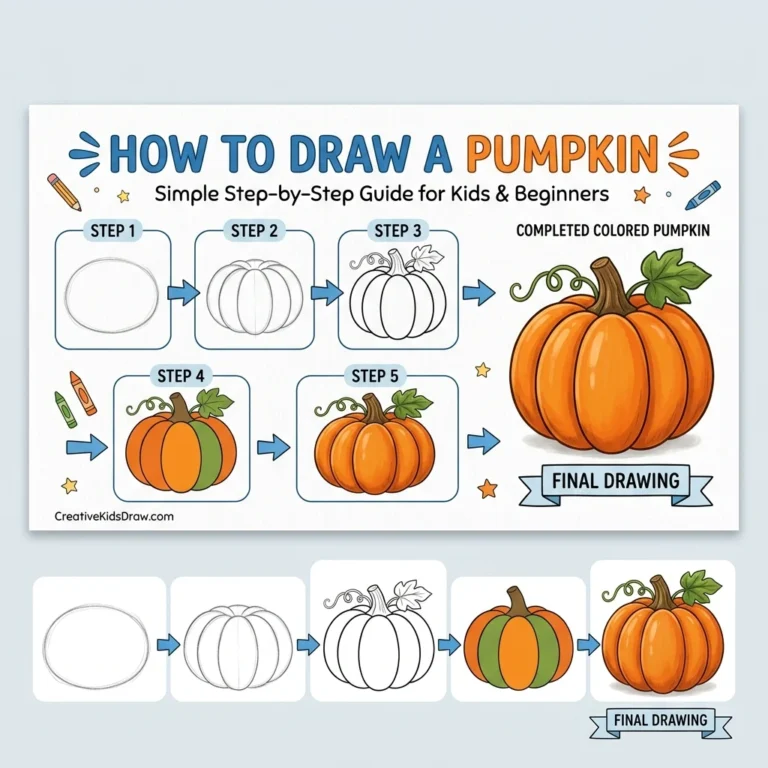
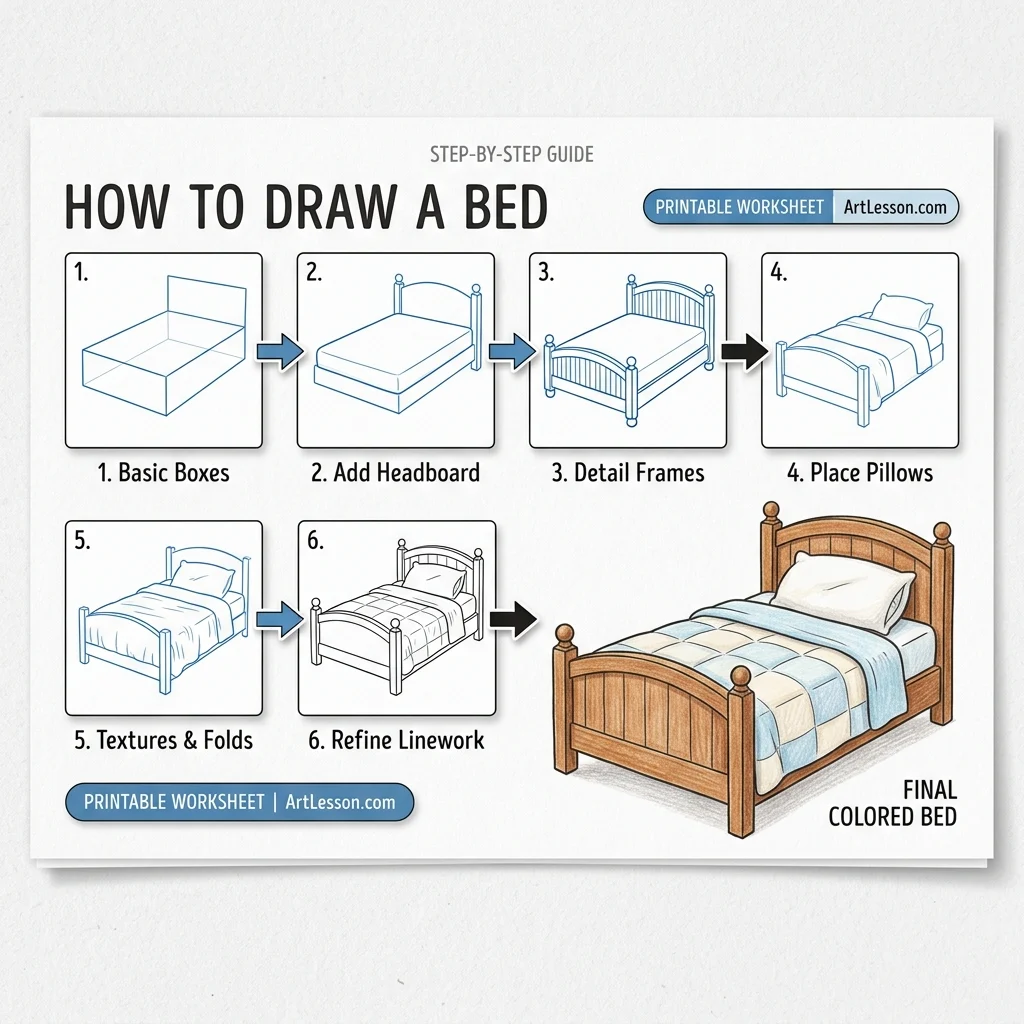
How to Draw a 3D Bed: Easy Step-by-Step Drawing Tutorial for Kids
Let’s draw in 3D! In this tutorial, we are going to learn how to draw a cozy 3D bed using isometric perspective in 9 easy steps.
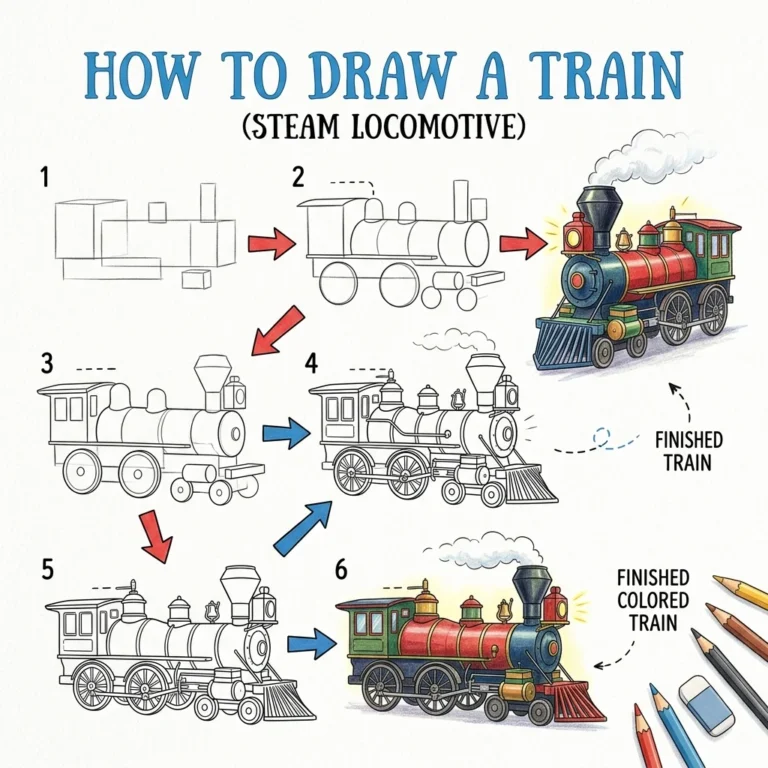
Every new line is highlighted in pink so you never get lost. Grab your ruler and let’s build a comfy bedroom scene! If you’d rather build something that moves, our Train tutorial is another fun 3D-style project.
Materials You’ll Need
Step-by-Step Easy 3D Bed Tutorial
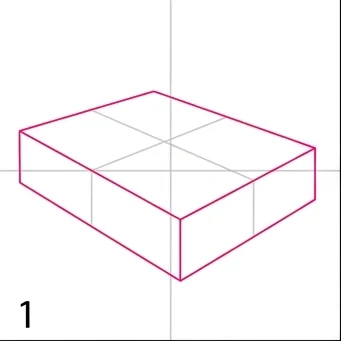
Start by drawing a large 3D rectangular box. This will be the main mattress and box spring of the bed.
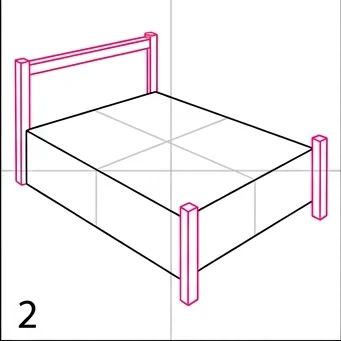
Draw four thick vertical posts, one at each corner of the mattress box. Connect the two taller back posts with a bar to start the headboard.
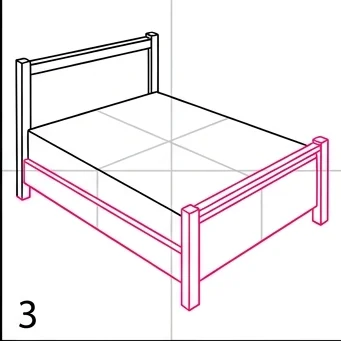
Draw straight horizontal rails connecting the bedposts along the side and across the front footboard.
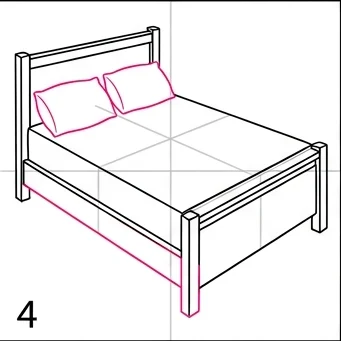
Draw two puffy rectangular pillows resting on the top of the mattress near the headboard. Also, add a shadow line under the bottom edge of the bed.
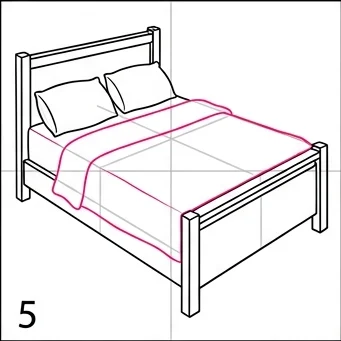
Draw a wavy line crossing over the middle of the mattress to show where the comforter or blanket is folded back.
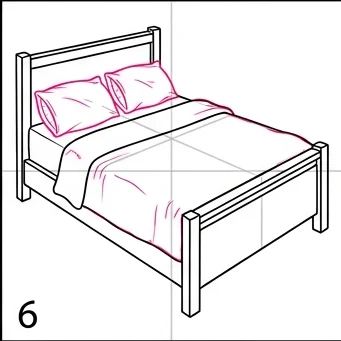
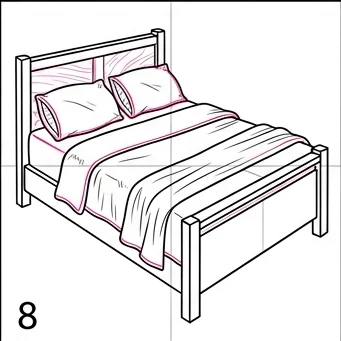
Draw some short, curved wrinkle lines on the pillows and the top edge of the folded blanket to make them look soft and comfy.
Draw long, sweeping drape lines down the side and front of the blanket to show the fabric folding and hanging over the edge.
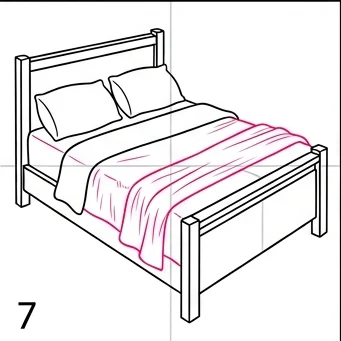
Draw smooth, wavy wood grain lines on the headboard, footboard, and posts. Add a few extra details to the sheets!
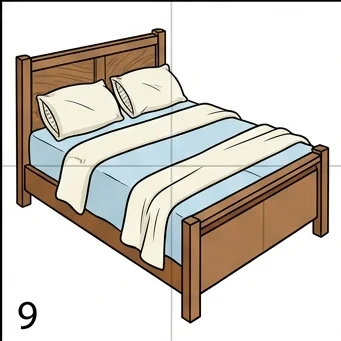
Color the wooden bed frame a rich brown. Color the mattress sheets light blue, and leave the pillows and blanket a warm cream or white.
Isometric Lines: Keep the vertical bedposts perfectly straight and angle the side lines consistently for a solid 3D look!
Soft Fabric: Curved wrinkle lines on the pillows and blanket are what sell the ‘soft and cozy’ feeling — don’t make them too straight.
Love drawing 3D objects? Try these next!
Frequently Asked Questions
People Also Ask
This is a Grade 4 level tutorial with isometric 3D shapes, great for kids who enjoy a more advanced drawing challenge.
It’s a drawing technique where 3D objects are shown with straight vertical lines and consistently angled sides, giving depth without complex vanishing points.
A ruler helps keep the frame, posts, and rails nice and straight, making the 3D effect look much more convincing.